

Let’s talk about time. Specifically, Malaysia’s time. Ever felt like your morning is a major struggle, where the sun finally decides to show up just as you’re rushing out the door? You’re not alone. This isn’t just a “morning person vs night owl” problem; it’s a time zone conundrum that West Malaysia has been living with for over four decades.
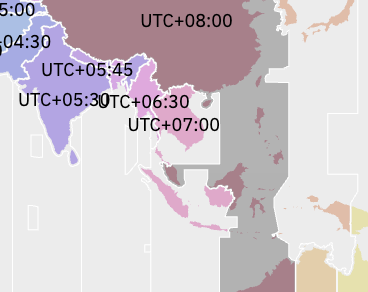
We’re on GMT+8, the same time zone as places far to our East like Manila, Hong Kong, and even Taiwan. But geographically, Peninsular Malaysia sits closer to the longitude of Bangkok and Jakarta, which happily clock in at GMT+7. You can literally see the difference: our neighbours get bright sunshine earlier, and their social time aligns better with the sun’s rhythm. Plus, the map looks kinda weird this way.
So how did we get here?
Malaysia has changed her time zone a total of 6 times. Most recently (and for the longest period), Peninsular Malaysia was on GMT+7:30. Then, on New Year’s Day, 1982, the then Prime Minister, Tun Dr. Mahathir Mohamad, decided to set our clocks forward by 30 minutes to align with Sabah and Sarawak, unifying the country’s time zone to GMT+8. Singapore, wanting to keep things smooth for business and travel with its neighbour, followed suit.
It was a move for national unity and convenience, which makes sense from an administrative and economic standpoint. But here’s the kicker: convenience might be costing us a little too much in terms of our well-being.
We’re not lazy; there’s a biological reason
The pushback against GMT+8 isn’t just about wanting to see the sunrise earlier (though, let’s be real, a 7 AM sunrise feels late). It’s rooted in chronobiology, the study of our body’s natural rhythms.
Our internal body clock, or circadian rhythm, is primarily set by light. When the social clock (what your boss says is 9 AM) and your solar clock (what the sun says is 9 AM) don’t match, you end up with what scientists call “social jet lag.”
Because we’re effectively living an hour ahead of where we should be, our natural sleep-wake cycle is disrupted. Studies on time zone misalignment, particularly those looking at the effects of Daylight Saving Time (which is similar to a one-hour shift), suggest that a mismatch between social and biological time can lead to:
- Shorter, lower-quality sleep: You feel like you’re losing an hour of sleep every day because your body wants to wake up earlier than the alarm.
- Increased health risks: Chronic sleep disruption has been linked to higher risks of obesity, diabetes, and cardiovascular diseases. With this extra stress, it’s no wonder we’re one of the unhealthiest in the region.
Switching back to GMT+7 would mean our workday starts when our bodies are naturally ready, giving us an hour more of crucial morning sunlight—a natural mood booster and circadian rhythm regulator.
The big question: Is unity worth the time disruption?
The main argument against the shift is, of course, the economic disruption and the loss of a unified time zone with East Malaysia. Will it disrupt business dealings with Singapore and regional partners, such as Hong Kong? Will it be too complicated for logistics?
These are valid concerns, but are they greater than the collective health and well-being of the majority of the population in Peninsular Malaysia? The debate is reignited every now and then for a reason: many of us just feel off.
Maybe it’s time to seriously consider turning the clock back. Your grumpy-before-7 AM self (and your hardworking body clock) would probably thank you. So should we rewind the clock?